From the Journal
Turn a closet audit into an outfit system
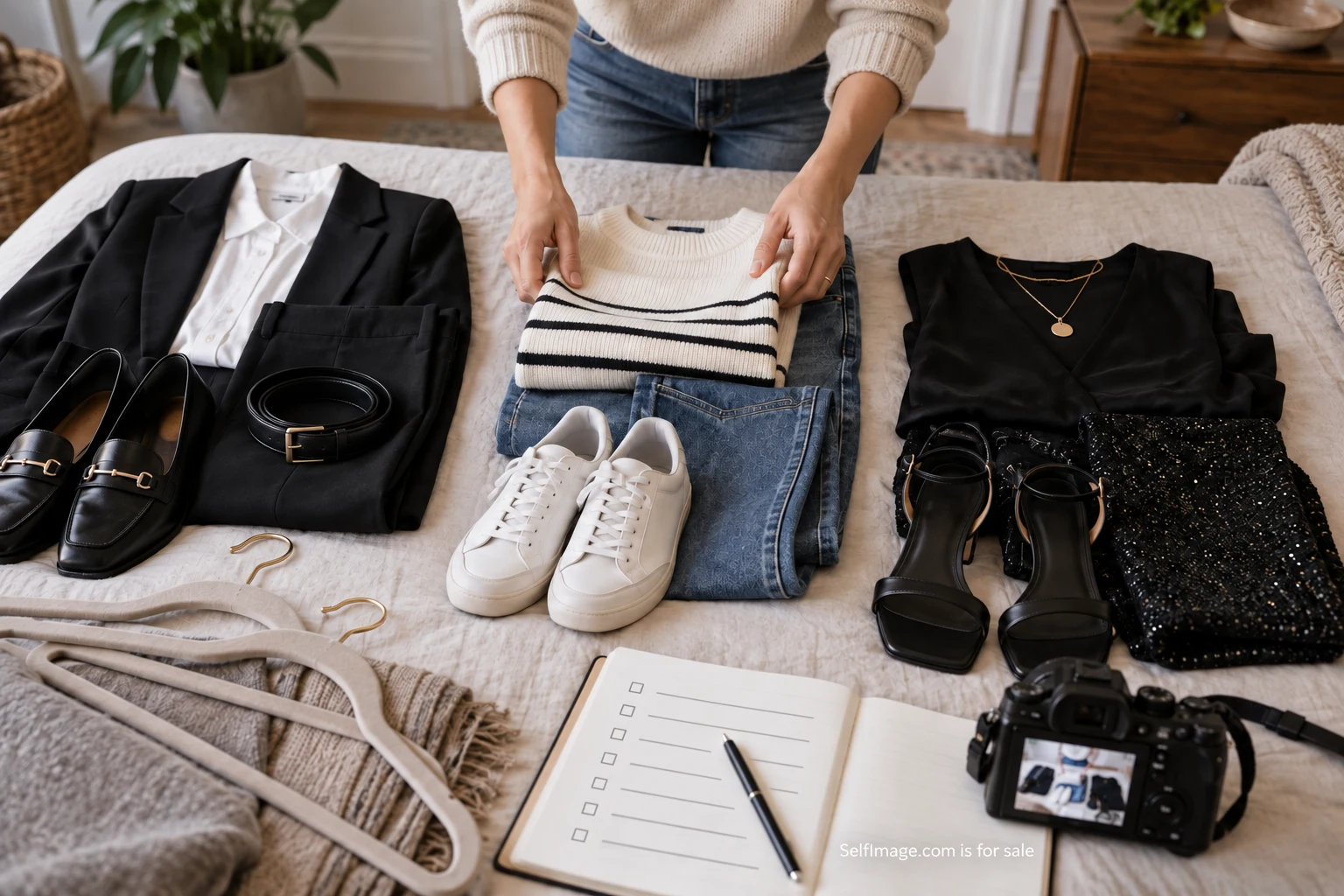
A closet audit is useful when it makes the next ordinary morning easier. Start with the situations your clothes need to serve, then build a small record of combinations that already work. The goal is a set of choices you can repeat and adjust. You do not need to empty every drawer or decide the fate of every garment in one afternoon.
Choose a manageable area and a period of time you can comfortably give it. A rail, a drawer or the clothes worn most often is enough for a first session. Keep a place to return anything you take out, and leave space to stop before the room becomes difficult to use. The audit should fit the person doing it.
Write down the week before touching the clothes
List the situations that occur in a typical week. Use plain descriptions such as walking to work, sitting at a desk, meeting a client, working at home or going out in the evening. Note the practical details that affect clothing: weather, room temperature, footwear, travel and any dress expectations you already know.
Then identify two situations that cause the most friction. Perhaps office clothes are available but rarely clean at the same time. Perhaps a reliable outfit becomes uncomfortable during a long walk. These are more useful starting points than deciding you need a completely new style. They point toward a specific combination or preparation task that can be tested.
Keep preferences visible. Write down the fit, texture and ease of movement you prefer, along with any fastenings or storage arrangements that are inconvenient. There is no need to justify a preference by turning it into a rule for other people. It is enough that it affects what you will actually choose to wear.
Pull a small working group
Select pieces you already reach for in those two situations. Include shoes and outer layers if they are part of the day. Put aside anything that needs a decision later, but give that pile a boundary. A small labeled box or one section of a rail prevents “later” from taking over the whole room.
Try combinations in the way you use them. Sit down, reach for something and put on the outer layer. If the outfit is for a walking commute, include the shoes used for that walk. These simple checks may reveal that a combination needs a different layer or that it is more useful for a shorter occasion.
Record the result with neutral language. “Sleeves bunch under this jacket” is a practical observation. “Works for a seated meeting, less useful for walking” tells you when to choose it. A useful note describes the clothing and the situation. It does not require a judgment about your body.
Put care and preparation into the plan
Read the care labels on the pieces selected for repeat wear. The FTC's consumer-facing apparel guidance explains that manufacturers and importers must provide care instructions for covered clothing. Keep those instructions with the garment or record the relevant details in your notes. Do not assume that similar-looking fabrics need identical treatment.
A care requirement can affect how often an outfit is ready. A piece that needs special handling may suit an occasional event while a washable alternative serves a recurring weekday. That is a scheduling decision, not a verdict on which garment is better. Build the rotation around the care routine you can realistically maintain.
Separate cleaning, repair and alteration tasks. Write the actual action beside each item: sew on a button, ask a professional about a hem, or follow the label's cleaning instruction. If a label is missing or unclear, ask an appropriate professional before experimenting. The FTC's care-label explanation notes that cleaning by a method outside the label's instructions can carry risks.
Make five outfit records
A phone photograph can be enough to remember a useful combination. Photograph the pieces laid out or take a private outfit photo, depending on what is comfortable. Keep the images in a place you control. You do not have to publish them or show them to anyone for the record to be useful.
Give each record a situation-based name: “office with walking shoes” or “evening, light jacket.” Add the pieces, any preparation needed and one reason the combination works for that situation. If taking photographs is inconvenient, a written list or simple sketch can serve the same purpose. Choose a format you will actually consult.
Start with five records. That is enough to reveal repeated pieces and care bottlenecks without requiring a photograph of everything owned. If the same pair of trousers appears in four combinations, check whether its cleaning schedule supports that use. A second option might come from another piece already in the closet.
A worked example for a mixed week
Consider an illustrative week with two office days, two days working at home and an evening meal out. The starting group contains two pairs of trousers, three tops, one jacket, a knit layer and two pairs of shoes. One top needs a button repair, so it cannot yet be treated as a ready option.
The first office outfit combines trousers, a top, the jacket and walking shoes. The second uses the other trousers with the knit layer. A home outfit uses a comfortable top that is already in regular rotation. The evening combination reuses the first trousers with a different top and shoes. A fifth record keeps an alternative layer ready for a colder day.
The audit reveals two tasks before it suggests a purchase. The button needs repair, and the jacket needs its labeled care before the next office day. Completing those tasks would return existing pieces to use. A possible gap remains: a second comfortable shoe option. The note describes the required function and leaves the buying decision for later.
At the end of the week, review the records. Which outfit was chosen? Which was skipped, and why? An outfit might have failed because the weather changed or a piece was unavailable. Record that context so the next adjustment responds to the actual problem. One week of use can make the next audit more focused.
Arrange storage around retrieval
Keep frequently used pieces where you can reach and identify them comfortably. If a particular drawer or hanger arrangement creates friction, try a small change before reorganizing the entire space. Labels, photographs or grouping by situation may help you find a combination. The right arrangement is the one that works with your space and preferences.
Keep unfinished tasks separate from ready clothing when possible. A repair item mixed back into the main rail may repeatedly look like an available choice. A clearly marked task area can prevent that confusion. Give it a review date so garments do not disappear into an indefinite holding zone.
Finish with a short checklist
Before stopping, confirm that five combinations have a record, their required pieces are easy to locate and any care tasks are written down. Return the remaining clothes to a usable place. Choose one repair or preparation task to complete next. Leave broader decisions for a later session with a clear boundary.
The next useful action is to photograph or write down five reliable outfits from clothing already owned. Use them during a real week, then revise the notes where they proved incomplete. A closet audit becomes an outfit system when the record helps you make an ordinary choice again tomorrow.